Why our first customer switched
Our first customer tried one of the big platforms before us, and left because of the complications. They stayed because setup happened with them in the room rather than being handed over.
Hiring for multi-unit restaurant groups
Yebo Hire runs the whole loop from a poster on the counter to a decision with a reason, across every store you operate, including the ones that aren't open yet. Built with a multi-unit franchise group and in daily use across 67 stores in three franchise groups.
Measured results
Applicants who scan the poster in the restaurant become a payroll-confirmed hire about twice as often as job-board applicants.
7.3% against 3.8% of applications, same months, same time to convert; 998 applications matched to payroll.
The software works out at $43 per hire your payroll records, and $60 per hire still on the roster at 90 days.
Software only, at the flat per-store fee. No job-board spend in it.
In one day we found 27 stores whose hiring poster had quietly stopped working.
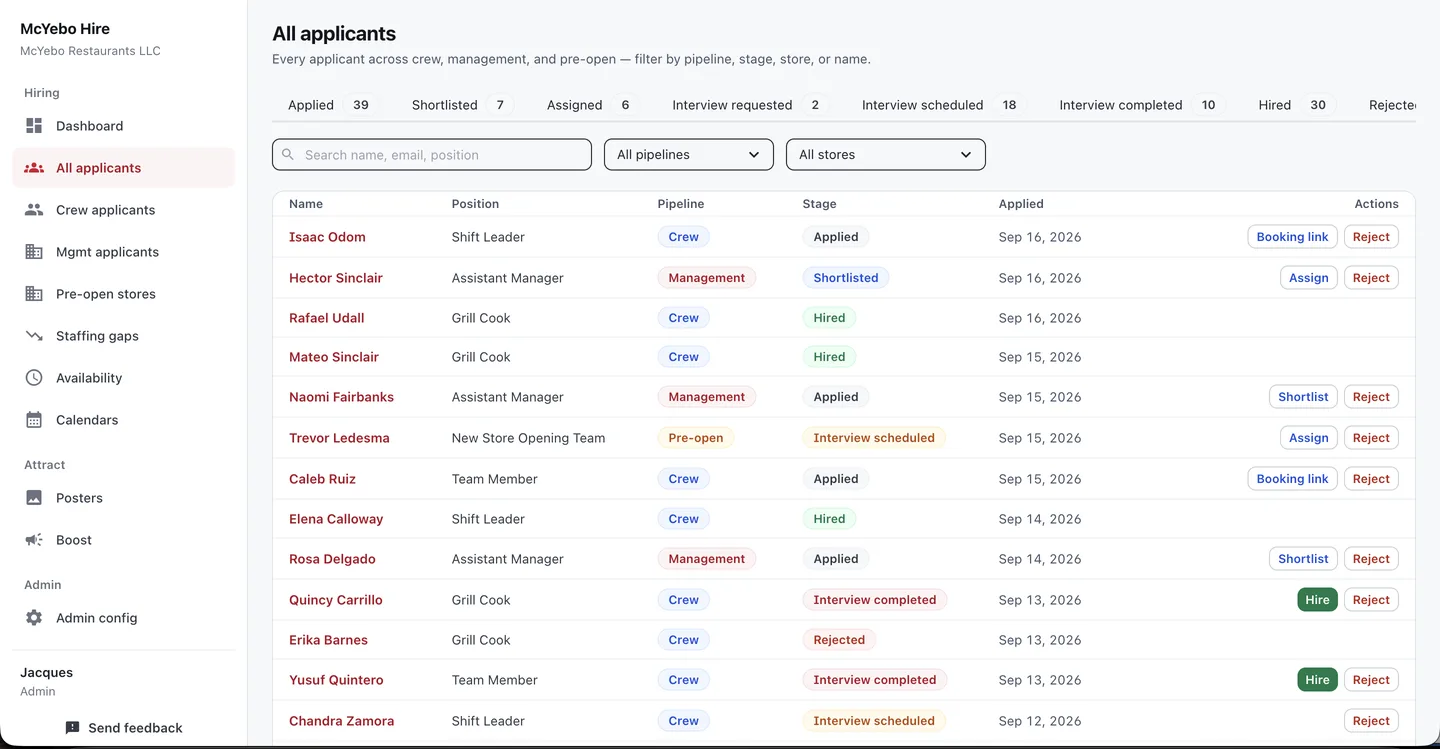
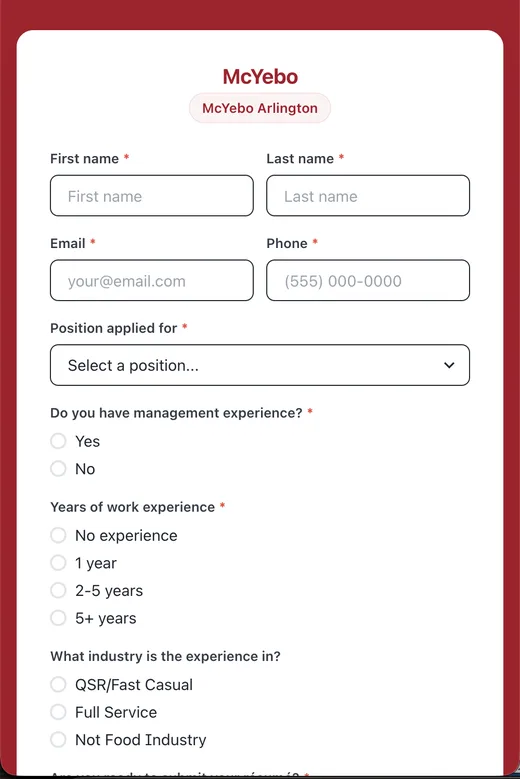
Applicants · McYebo demo tenant · real product, fictional data
Why now
General-purpose HR software is built for salaried headcount planning. Hourly hiring happens on a phone in the car park, and the job needs filling this week.
Why our first customer switched
Our first customer tried one of the big platforms before us, and left because of the complications. They stayed because setup happened with them in the room rather than being handed over.
How it works
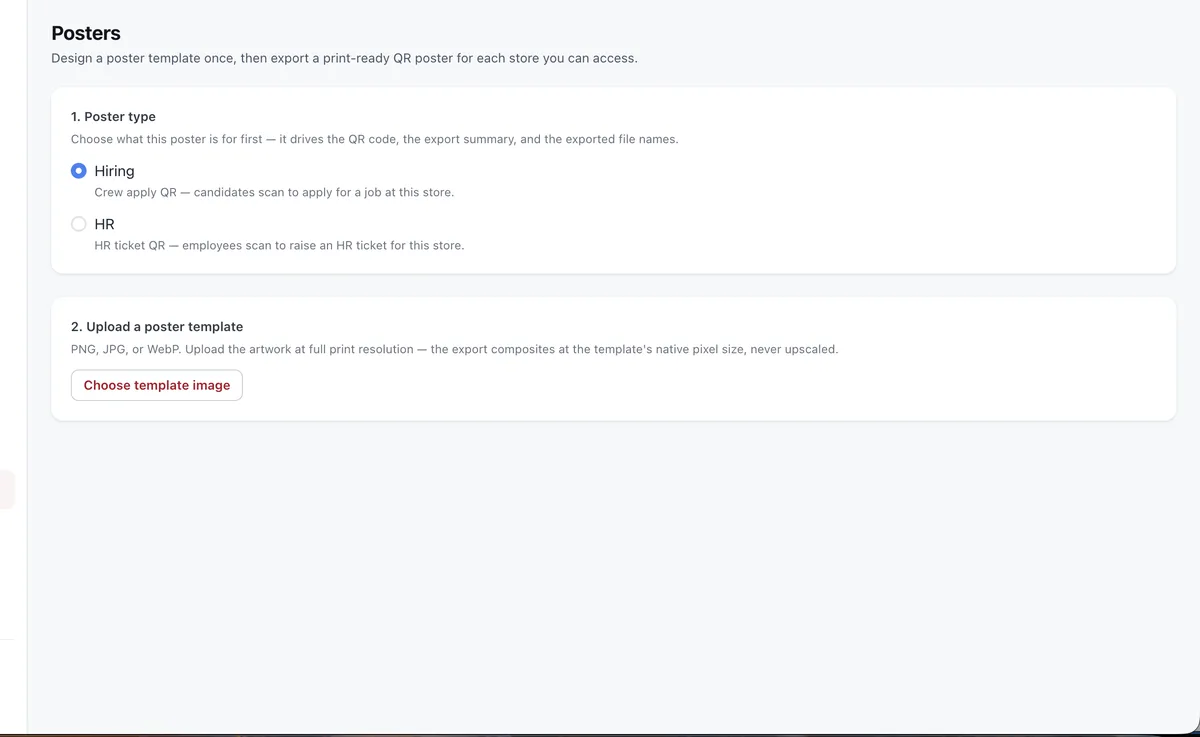
Design a poster once and export a print-ready QR code for every store. Tagged links cover Indeed and anywhere else you post. Every application is attributed to its store, region and source, so you can see what is actually working.
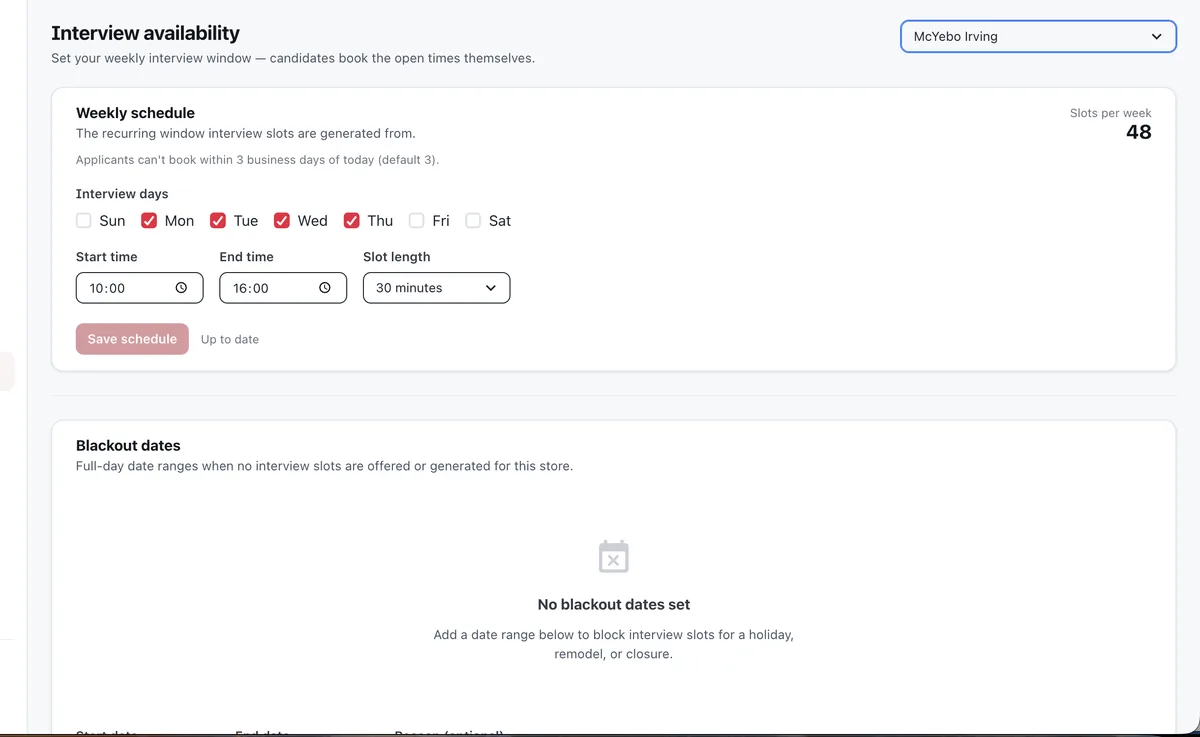
Set availability once. Slots generate four weeks ahead and never run dry. Candidates book themselves; invites, calendar files and reminders send automatically, and a candidate can cancel or rebook straight from the email.
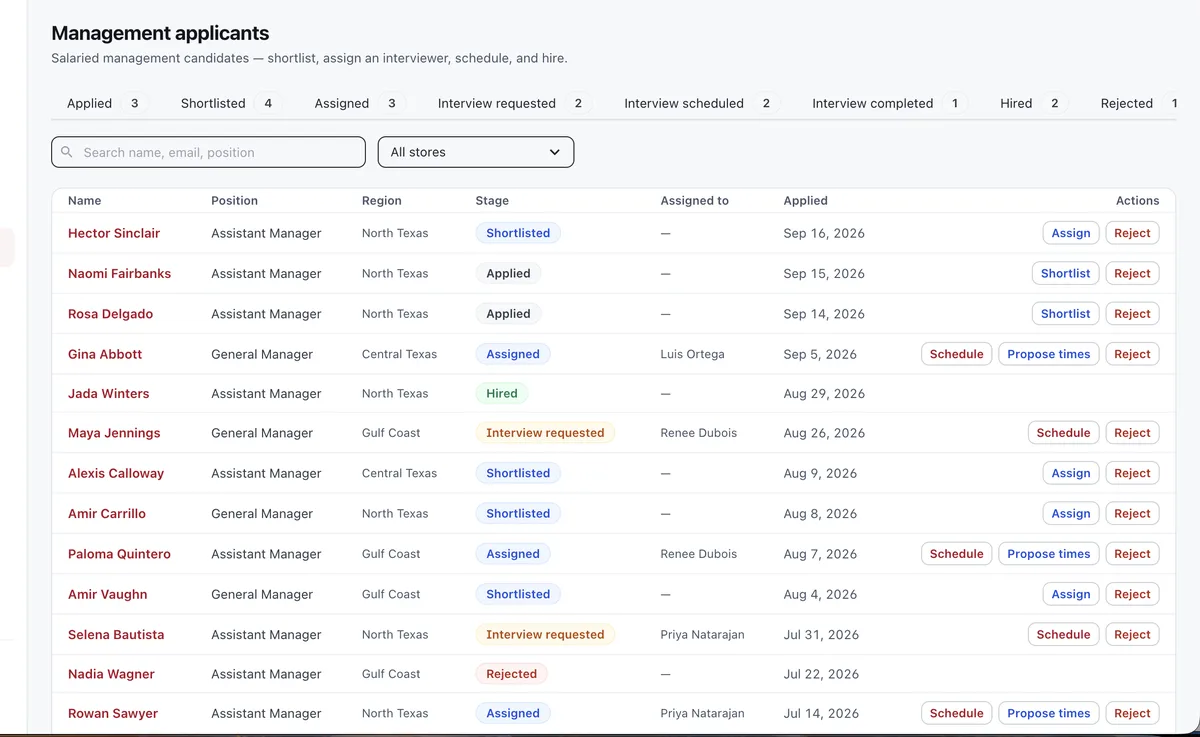
GM and AGM hiring runs by region. Shortlist a candidate, assign an interviewer, propose times. Area and district reach is modelled, so each manager opens the system to their own stores and nobody else's.
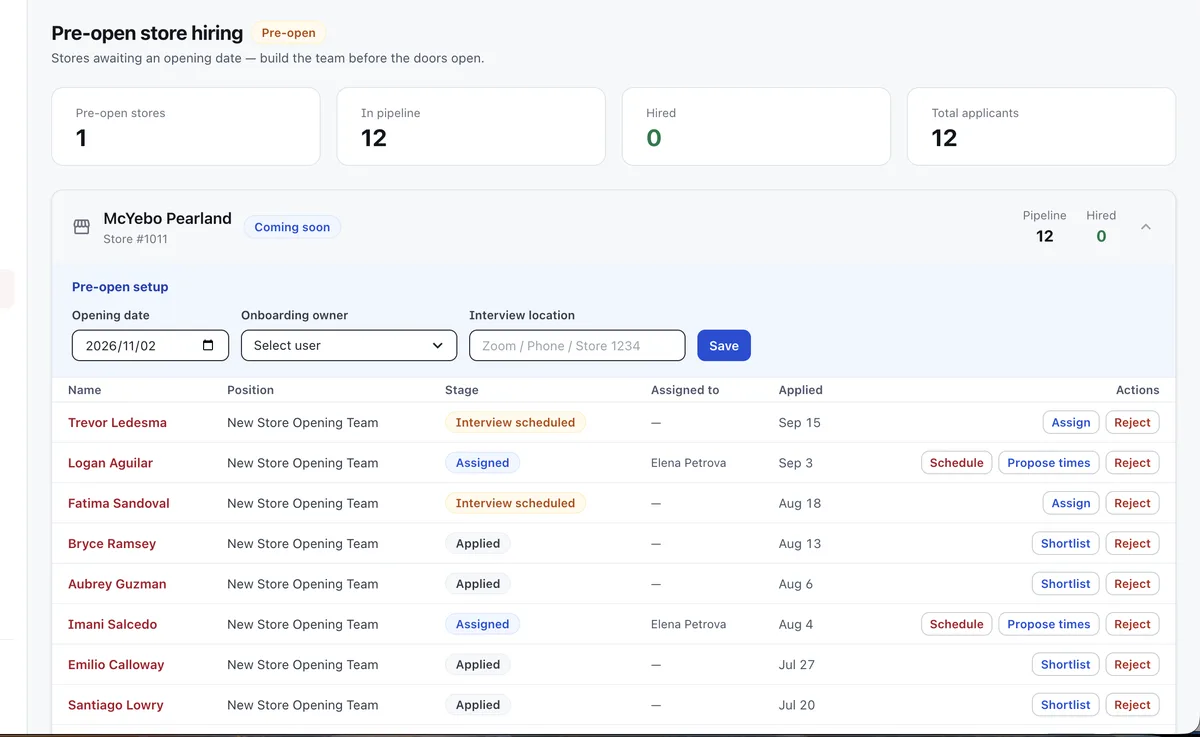
Franchises grow by opening stores, and a store that opens in a month has no counter, no poster and no manager on site. Yebo builds the hiring infrastructure before the store exists: the planned store lives in the system with its opening date and a hiring owner, and its applicants stay in their own pre-open pipeline, so they never clutter a neighbouring store's list. The hiring manager contacts them from the profile and sets the interview location as a store, a Zoom link or a phone number.
Open the store with a crew already hired.
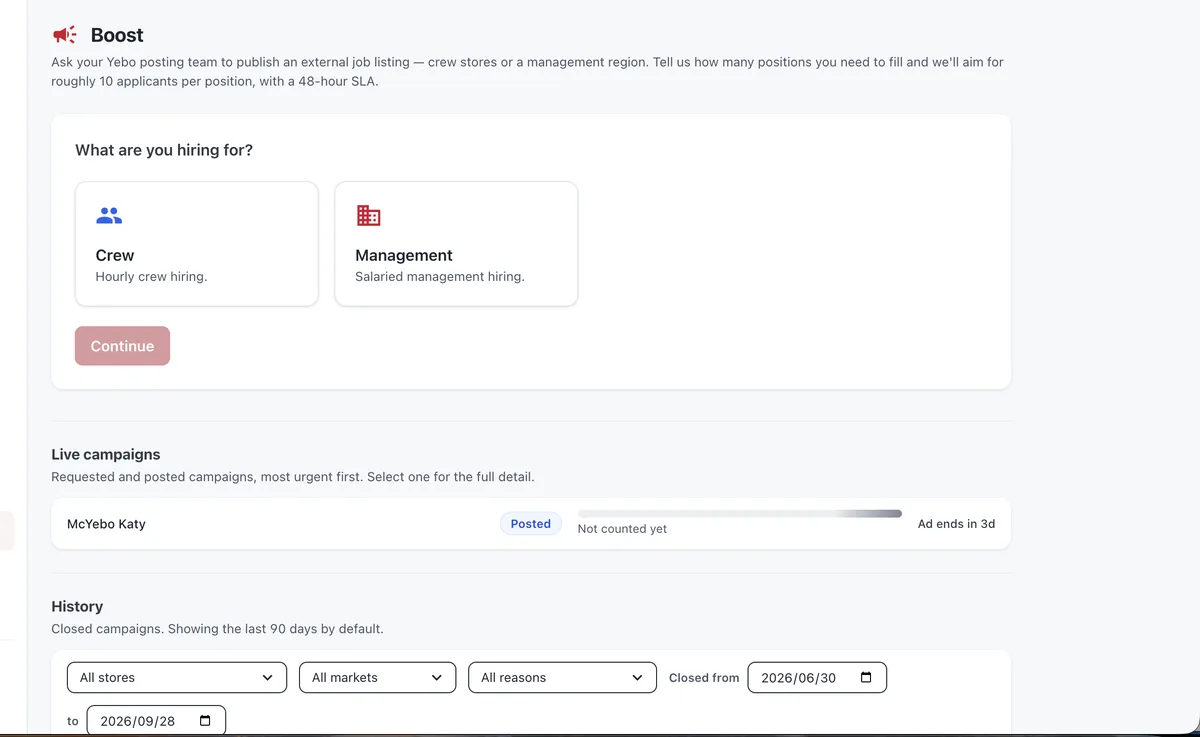
Ask for the positions you need to fill. Our team posts them within 48 hours. Applicants count against a target and the ad closes itself when it gets there. Your QR posters bring applicants every day for free — Boost is the top-up, and it covers a pre-open store until its poster goes up.
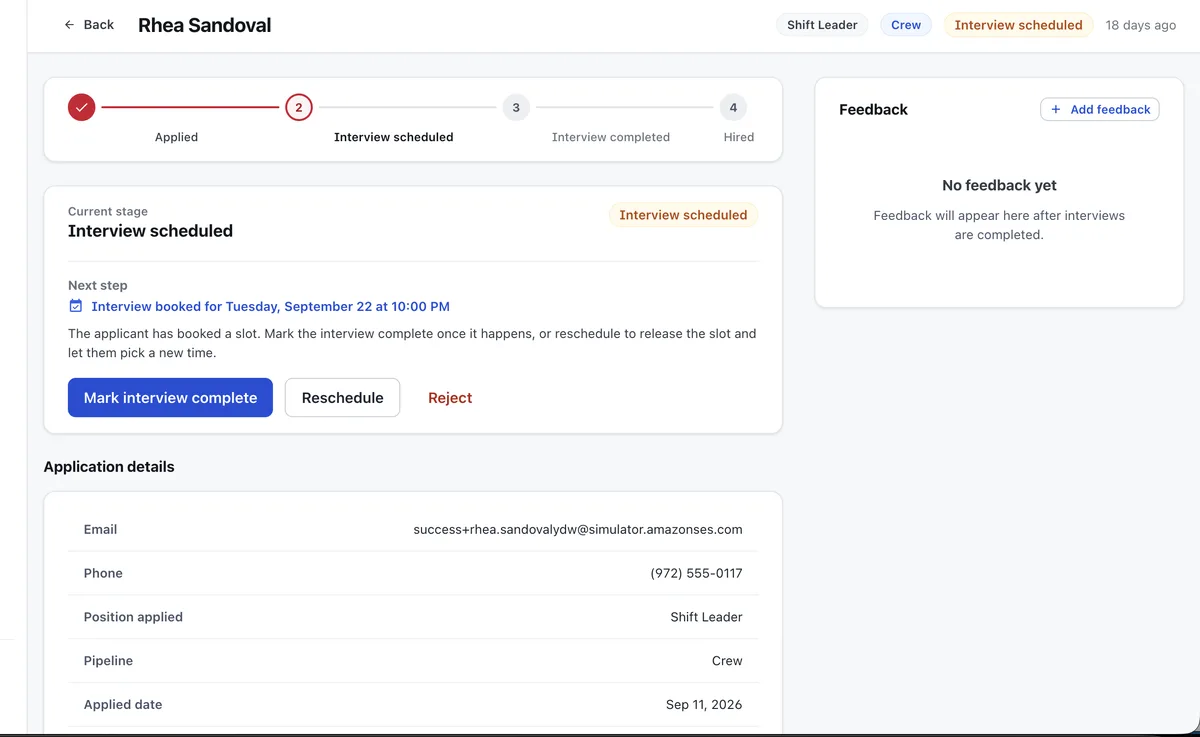
Hire or reject with a required reason — no blank decisions. Candidates get their own short survey asking whether the interviewer actually showed up. What you end up with is a trail you can defend.
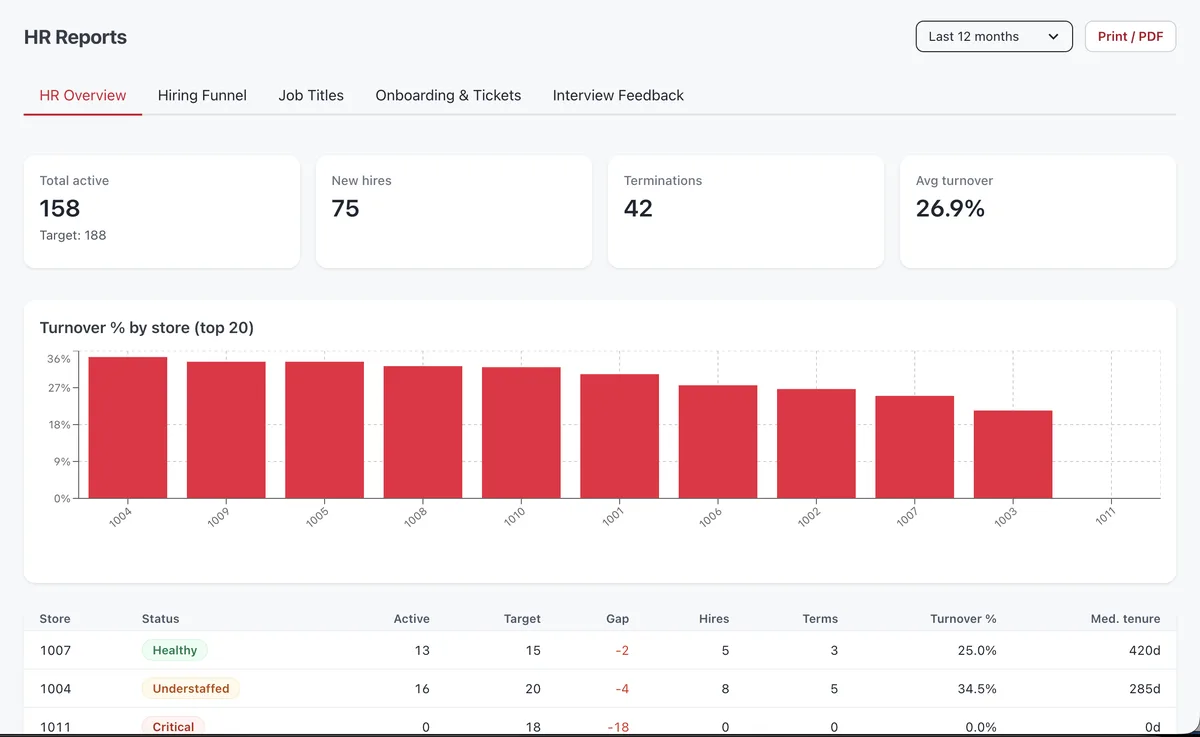
Your roster comes from your payroll export. Headcount against target and turnover by store are on one page. There is an anonymous HR line with a reply thread, and write-ups and reviews stay on file.
Who uses it
Staffing gaps across the estate, ranked worst first.
The roster, the ticket queue and the reports, in one place.
Their regions, their Boost requests, their interview calendar.
Put the poster up, set availability once. Applicants book themselves; recording a decision is one tap, not a workflow.
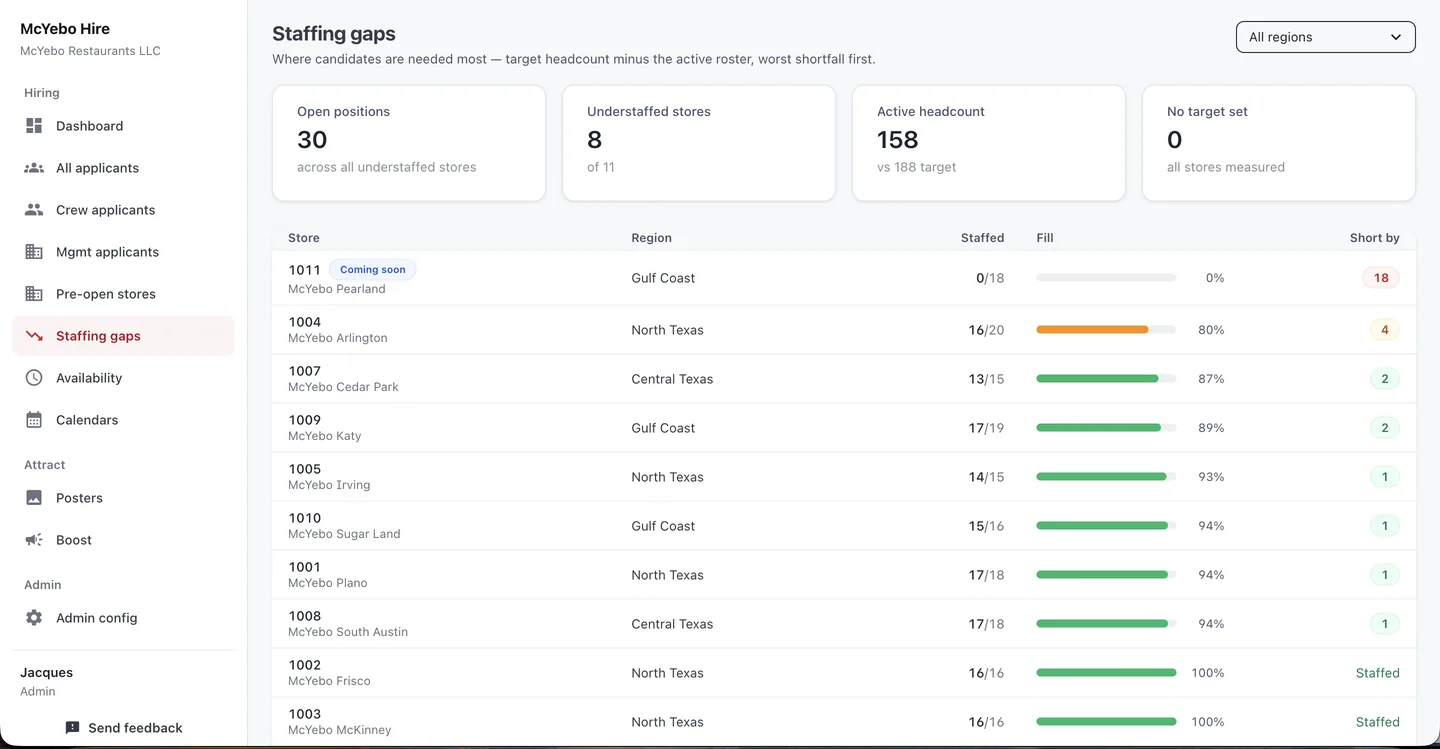
Staffing gaps · McYebo demo tenant · real product, fictional data
Multi-unit restaurant operators, franchise groups and small chains, roughly ten to a few hundred locations, hiring hourly crew continuously rather than in batches, and opening new stores while they do it. It suits an operator who has learned that hiring software nobody logs into is worth nothing — so this one is built to work when nobody does.
Not a fit for a single independent restaurant, or for salaried-only, low-volume hiring.
Getting started
Your stores, regions, managers and target headcount are configured together, with you in the room.
Posters go up, and interview slots start generating themselves four weeks ahead.
Your team works the list. Hires reach your HR roster with your next payroll import.
A short walkthrough with your locations and roles in it, so you judge the fit rather than a demo tenant.